Monday, July 11, 2016

Healthy Family Ties

It has been the jest of jokes for decades and is the focus of TV sitcoms. . . the dreaded in-law problem. No doubt many married couples deal with a negative in-law situation. 

Image result for jokes about in laws


As a newly married couple living in the same city as both parents, we found ourselves torn between which parent to visit each Sunday. It was bad enough that I remember even "keeping score". "We spent 3 hours at your parents' house, we have to spend 3 hours at mine". It was a difficult way to start a marriage and try to build a relationship with each other. Unfortunately, my husband's family was more demanding and fed the competition. When holidays came, it was even more intense. We were torn between families and had no chance of creating our own traditions as a family.

Unfortunately, we did not follow the advice in the article Creating Healthy Ties with In-laws and Extended Families by James M. Harper and Susanne Frost Olsen. It said, "Often the relationship between families can be like a tug-of-war. . . it is important for both the husband and the wife not to be in the middle" (pg. 328).

Image result for tug of war

The first task of a newly married couple is to separate from the families from which they grew up and create a strong marital identity. They might think of themselves as existing together within an invisible fence.
Image result for marriage boundaries

Since that experience, my husband and I are careful not to put demands on our married children. We let them decide where they want to spend the holidays and let them know they are always welcome, but they can choose what they want to do. It has been a blessing for all of us.

Conversely, my in-laws continue to be demanding of the family members which drives wedges in relationships and leads to less-satisfying outcomes. An example of this is the family reunion held every other year. My father-in-law sends a flood of emails urging all family members--clear down to the grand-children--that they need to plan ahead and be there. There is no justifiable reason to miss the reunion and everyone has plenty of time to plan ahead. The wording he uses, which lacks any indication family members have the ability to choose, creates a push-back and rebelliousness. One of my sons refuses to attend just because of that.

He is an elderly man who wants more than anything for all of his family to be together. It is a righteous desire. If he changed his methods from pressuring everyone to honestly expressing his love for each family member and his desire to see all of them while allowing their ability to choose, many more would make the concerted effort to attend, which would fulfill my father-in-law's desire.

Harper and Olsen said, "The good news is that when parents-in-law understand inclusion and exclusion issues, the necessity of monitoring and managing their need for control, the loyalty tugs, and the importance of helping a new couple establish a solid marriage boundary, in-law relationships are improved" (pg. 333).

Families should strive for closeness instead of enmeshment. Enmeshment happens when families feel like they always have to be together and there is confusing about loyalty and feelings. Children might be afraid of offending parents. Closeness is different and parents and children both feel secure about their relationship with each other. It involves emotional closeness, but parents feel comfortable staying on their side of the fence. Having a close relationship without enmeshment concerns is the best scenario for families.



Wednesday, July 6, 2016

Power and Control in Marriage

Healthy marriages consist of an equal partnership between the husband and wife. Many problems happen in marriages when there is an unequal relationship. In fact, issues of power are predictive of marital problems. Research also shows that unequal power in relationships is predictive of depression. Richard Miller said, "Research consistently finds that happy relationships are most likely to occur in marriages where the couple shares power and has a true partnership" (Miller 2008).

Image result for healthy marriage

How to Share Power

1 - Make a list of decisions commonly made in marriage. Rank the decisions as important, less important, and least important.

2 - Decide how the decision is currently made, how you would each like it to be made, and lastly, negotiate how you want each decision to be made. Some decisions might be made by just the wife or just the husband. Others may be made by the wife or husband after consulting the other spouse. Other decisions may be made jointly.

A full description of the Powergram by Richard B. Stuart can be found here: https://books.google.com/books?id=-YwsDr3fW1cC&pg=PA266&lpg=PA266&dq=stuart+powergram&source=bl&ots=pPoMpFv5iW&sig=XdThE1M95C9xBhzQe9JvH0RNO9Q&hl=en&sa=X&ved=0ahUKEwib--Wx0uTNAhUDzmMKHQqnDLgQ6AEIHDAA#v=onepage&q=stuart%20powergram&f=false 

My husband and I completed the Powergram and learned several important things. For one thing I realized that I liked to decide what household duties I want to do. My husband agreed. He does not feel the need to have a say in decisions about my household duties. I appreciated our discussion about that. It reminded me of conversations I've had with other wives where their husbands demanded certain things regarding the housework. One lady had to vacuum every room of the house each night. It was also helpful for our relationship to understand how my husband felt about decisions regarding the bringing of children into our home. He explained how he thought that should be my decision after consulting him since it affected my mind and body. 

In most relationships today, a spouse would not outwardly proclaim that they were controlling in their marriage. Hopefully, that is not something to brag about. It is more common for controlling behaviors to be more subtle and less easily detectable. 

The Powergram explained above can help identify if power is an issue in your relationship. If you find yourself in an unequal relationship, here is another thing to consider: The "leader-servant" model. This is how it works:

Ask the question "How can I help?" This is more Christ-like that thinking the way of the natural man which is "How can I help myself?"

Image result for helping each other

There are two major components in marital power:

1st - Process of Power (a spouse dominates conversations and doesn't listen to other partner's opinions)

2nd - Power Outcome (determined by which partner tends to get their way during a disagreement)

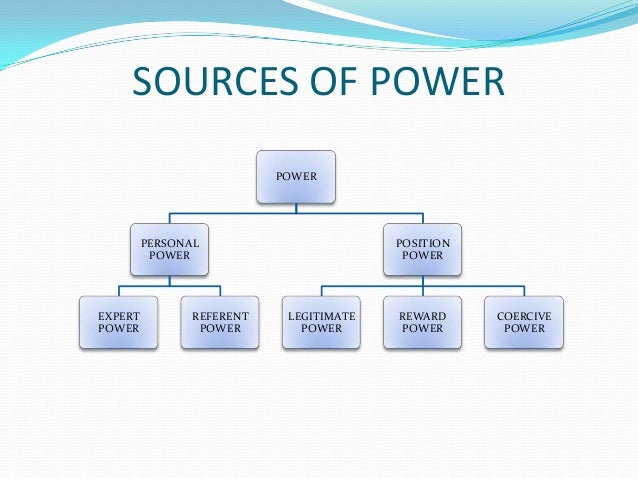
There are also several different bases of power:

Legitimate Power - derives from laws or norms that suggest  who should have greater decision- making influence.

Expert Power - derives from the agreement among others that one person has greater skill in a given area and is likely to make the wisest decision.

Referent Power - derives from the feeling that two or more people are members of the same social group and should be influenced by one another.

Coercive Power - stems from the belief by one that the other will punish noncompliance.

Reward Power - stems from the belief by one that the other will reward compliance.


It is important to remember that power is a process rather than a static property. It changes over time. Many decisions are made in families each day. Some are made with friction while others are made like a well-oiled machine (Stuart, pg. 253). Another important concept is that if there is no relationship, there is no power. The relationship we have with our spouse is an important part of making decisions. If we have a great desire for the relationship to be successful, we are willing to give up some power for the relationship to thrive. If this happens too much, we might start to lose faith in the relationship. The "principle of least lost" can occur if one spouse is not committed to the relationship.